
When the Body Breaks, the Soul Speaks: the Story of Juanita Morales Ocampo
This interview was conducted in Spanish and is published here first in English, as Juanita's community spans many countries and languages. Versión original en español al final.
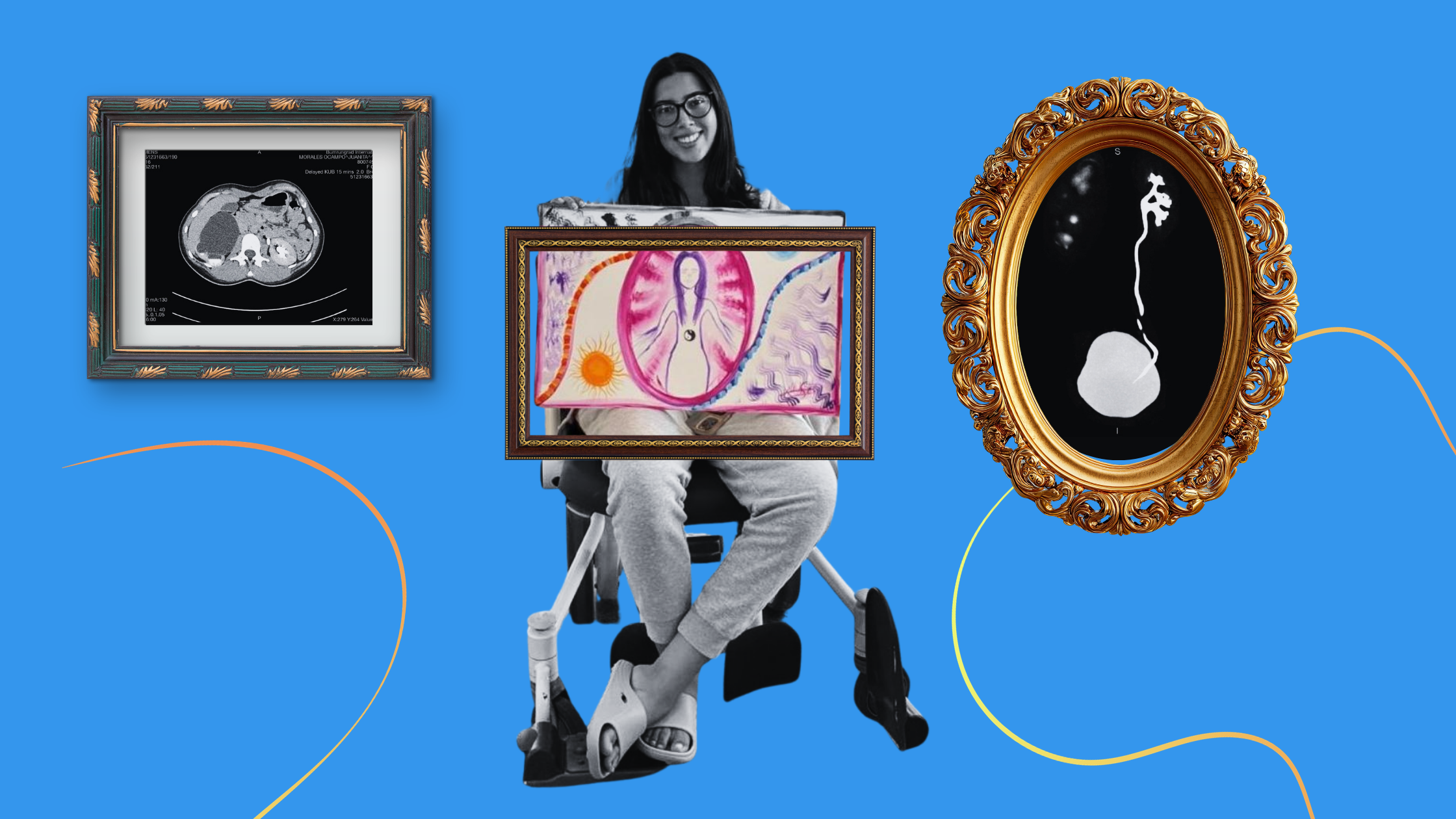
Juanita Morales Ocampo is 22 years old and lives in New York. She grew up between Bogotá and the Netherlands, studied at Berkeley, and has spent the early years of her career working on issues she cares deeply about — women, public policy, international development. She is the first to acknowledge that she has been lucky: the right people, the right education, the right support system at the right time. She doesn't take that lightly.
In January 2025, at 21, Juanita was traveling in Thailand when a routine hospital visit changed everything. A CT scan revealed that her right kidney had been silently failing — not for weeks, not for months, but possibly for an entire decade. No symptoms. No warning. No pain. Just a doctor she had never met, in a country far from home, telling her that one of her organs was essentially gone. That she would likely need it removed. That her body had been keeping a secret from her for years.
Most people go their entire lives without facing that kind of news. Juanita faced it before she had even finished her last semester of college — and instead of derailing her, it clarified everything: who she was, what she believed, and why she is now dedicating her career to women's health and the deep, often invisible gap between those who have access to care and those who don't.
The Roots of a Healer
Nicolás: Before the diagnosis, how would you describe the Juanita that existed then? Do you feel this crisis changed you, or rather brought you back to yourself?
Juanita: I think it brought me back to myself. It is not that I developed a different identity from who I truly am; rather, the journey opened a door back to my essence. Because throughout school, university, and adult life, one becomes distracted. One drifts away from what truly matters.
Ever since I was little, I carried a very clear healing energy within me. My mother tells me a story about when I was three years old and she was crying in the bathroom because of her separation process with my father. I walked in holding a small plasticine turtle I had made for her, and I began guiding her through breathing exercises. I already had that within me at three years old.
Nicolás: And where did that come from? Did someone teach you that?
Juanita: My godfather. I had the best godfather in the world, and I still do. His name is Jorge Julio Mejía, he is a Jesuit who works in Colombia and has dedicated his life to combining the teachings of Zen Buddhism with the Christian path. Meditation, the Bible, the teachings of The Little Prince. And also my mother; she always guided me in my spiritual journey and in my relationship with my body. That is the rich mix I grew up with. It was a millionaire education in the deepest sense of the word. And I truly believe that if I had not had those foundations, my story with illness would have been very different.
Nicolás: When you look back, do you feel that your godfather, that spiritual education, the way you were raised, was not a coincidence?
Juanita: One hundred percent. Those are reflections I have had myself as well. Certain things that happen to many people in their forties or fifties are reaching me while I am still very young. And I think life placed those challenges in front of me because it knew I could handle them. And because I had the tools to move through them.
The Diagnosis
Nicolás: Tell us about the moment you were diagnosed. Where were you, what do you remember?
Juanita: I was 21 years old. It was January 2025 and I was in Thailand, traveling with my partner at the time. My medical history included a kidney infection that had been detected a year and a half earlier in Berkeley. They gave me antibiotics and sent me home. Perfect, case closed.
In Thailand I started feeling something strange in my kidney. I went to a hospital in Bangkok — which is incredible, I had never seen anything like it — thinking it was just another infection. They performed an ultrasound and told me there was something unusual, that they needed a CT scan. My urine tests were perfect. My bloodwork, perfect. I looked perfectly healthy, no fever, no pain. Everything appeared fine.
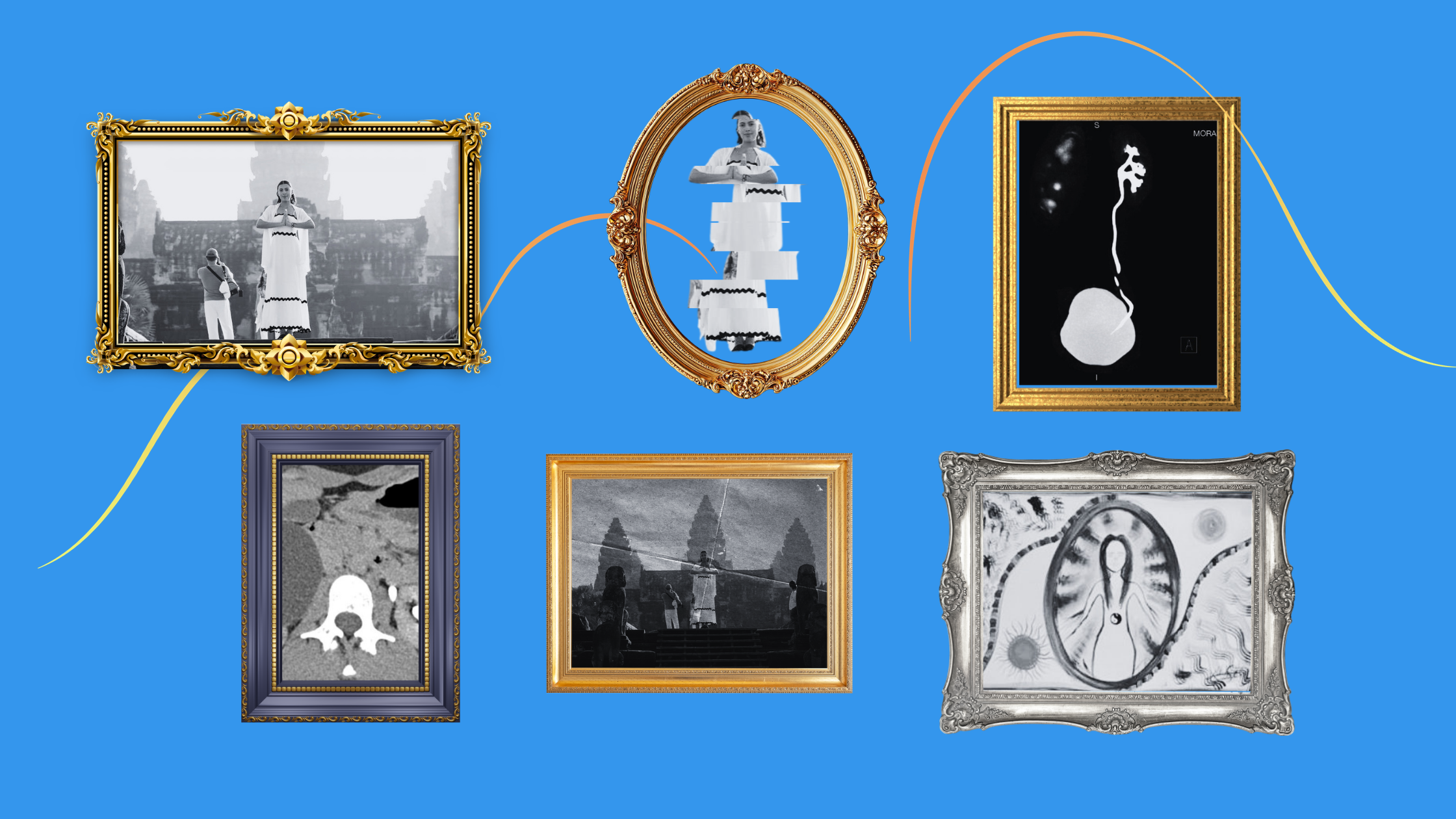
When they brought me to the urologist, I entered the office alone. The doctor turned his computer screen toward me and showed me the image: a normal kidney next to what looked like a balloon filled with liquid. It was as if my right kidney had completely lost its shape. I was in shock. He told me it looked like it had been that way for around ten years and that, based on his experience, he did not believe the kidney had more than five percent function left. That they would most likely have to remove it.
Nicolás: What did you feel in that moment?
Juanita: It felt like my soul left my body. Because I felt perfectly healthy. I had always been the healthiest person: exercise, organic food, everything you could imagine. And the idea that something serious was happening inside my body without me knowing left me speechless. I left the office in a wheelchair and started shaking.
The only person I could call in that moment was my father, because he has something I deeply admire: the world can be falling apart and he remains calm. I called him and told him everything. He answered: "Relax, breathe. We are going to figure out what this is. If you can finish your trip, finish it. I will speak with people here so that, by the time you arrive, you already have a medical team waiting for you in Bogotá." He calmed me down.
Angkor Wat: the Intuition of Change
Nicolás: What did you do after leaving the hospital?
Juanita: I ate some french fries and ice cream from the McDonald's at the hospital. And I cried a little. Then I decided that the next day we would go to Angkor Wat.
Nicolás: You went to Angkor Wat the day after they told you they would probably remove one of your kidneys?
Juanita: Yes. And it was one of the most significant days of my life. Angkor Wat is one of the largest temples in Asia. That day was spectacular. I was wearing a white dress and, while I walked through the temple, something inside me knew that a new chapter was beginning. I did not think it with my mind: I felt it. There are photos from that day that I keep with so much love. Because it was the first moment I understood that this was not just a medical crisis.
The following night I took my flight back to Colombia.
The Longest Night
Nicolás: What happened when you arrived in Bogotá?
Juanita: I arrived, took a shower, and went straight to the hospital. The doctor who treated me was named Andrés and, from the very first moment, he gave me a very special energy: he was completely willing to help me, with the best attitude. I looked fine on the outside, but when he reviewed my exams his face changed. He told me that, based on what he was seeing, he highly doubted my kidney had more than ten percent functionality. That the next day they needed to perform a renal scan to confirm it. And that, depending on the results, there were two options: remove the kidney, which was the most likely outcome, or perform a pyeloplasty, a surgery to correct the blockage and preserve it. Either option meant the same thing: I would not be able to return to Berkeley. I was going to have to face an invasive surgery that very week.
Nicolás: What was that night like?
Juanita: It was the worst night of my life. I was in the emergency room, without a bed, I had caught a cold on the plane, I had a headache, and I could not sleep. At some point I began to pray. I made a promise to the universe: if tomorrow the renal scan shows more than fifteen percent function, I am going to change. I am going to develop a daily meditation practice. I am going to become more compassionate. I am going to stop drinking alcohol. I am going to take care of what I eat. To become even more radical in my self-care. I placed that promise into the universe and eventually fell asleep.
Nicolás: And what happened the next morning?
Juanita: The renal scan came back at thirty-three percent. Andrés explained to me that the number was not entirely precise either because the kidney was so inflamed that it could not be measured properly, but it opened a third option that had not existed the night before: placing a double J stent for six months to reduce the inflammation, measure again later, and then decide. He warned me that the stent was extraordinarily uncomfortable, that his patients usually could not tolerate it for more than a few weeks. I said yes to everything. Because it meant I could return to Berkeley to finish my final semester.
Healing from Within
Nicolás: What happened after the procedure?
Juanita: When I came out of anesthesia, the first thing I did was ask my mom for her phone. And from the recovery room I created a WhatsApp group with eighty women who have been important in my life. I called it Healing Through Love. I explained what was happening to me and asked them to send me all their light and love, whatever they believed in. The messages I received were extraordinary.
Nicolás: If someone hears "healing energy" and thinks it is magic, how do you explain it to them?
Juanita: Healing energy, in concrete terms, is the ability to transmute: to transform something negative into something positive. In my case, it meant understanding what was happening emotionally, what I was offering my body through my thoughts, my emotions, and my habits. The connection between the emotional, the spiritual, and the physical is real. When you change your internal perspective, the body responds.
What I understood through that process was that the only person who was going to heal me was myself. Not the doctor, not the people who loved me, not the stent. Me. I began acupuncture, started a daily meditation practice, and changed my habits at the root. Not out of fear, but because something inside me was asking for it.
Nicolás: Do you think this took away your youth, or do you see it differently?
Juanita: I would not say it took away my youth. I feel that I developed certain capacities — emotional processing, introspection, body awareness — earlier than someone who has not had to face something difficult at this age. But I am still a young person living in New York with my best friends, going out, traveling. Just with a different level of consciousness. And I am grateful for that.
Privilege as Responsibility
Nicolás: You have spoken about your spiritual foundations, your godfather, your family, your access to doctors. How do you connect that privilege with your calling toward public health?
Juanita: One hundred percent. There are material, intellectual, and spiritual privileges. I had access to all three, and I am deeply aware of that. When you feel fulfilled in so many ways, the natural question becomes: now what? How do I use this for something greater than myself?
That is what led me toward the professional path I chose. Particularly in women's health, there is an enormous gap between those who have access to certain knowledge about their bodies, their cycles, and their reproductive health, and those who do not. That is the space where I want to work. Expanding those privileges so they can reach more people.
Spirituality as a Path
Nicolás: How do you define spirituality today?
Juanita: I would define it as the path of self-knowledge and the development of a connection with the energy that moves life. It takes many forms: different belief systems, different practices. But spirituality, in its essence, is something lived and reflective. A space where one becomes conscious and connects with greater forces and with inner wisdom.
Nicolás: What would you say to someone who is going through a crisis and cannot see anything positive in what they are living through?
Juanita: That gratitude is the path. I know it can sound difficult, even impossible, in the worst moments. But trying to understand that life places those challenges in front of you because it knows you can handle them, that they are part of your growth as a person, changes the way you move through them. And alongside that, community. You cannot go through something like this alone. The people who love me supported me unconditionally throughout the entire process. Seek out the people who love you, or seek a community if you do not have one close by. That makes all the difference.
Pablo, and What Remained
Nicolás: How did this story conclude medically?
Juanita: Midway through the year, I underwent the pyeloplasty. The kidney was able to be preserved. In the latest exam, it showed fifteen percent functionality. Medically, it will remain damaged, and I, from within my belief systems, believe that one day it will return to its full strength. But I have also accepted that if, at some point, that kidney has to go, I will let it go with deep love and gratitude for everything it taught me.
I gave it a name. His name is Pablo. He is a daily reminder to take care of myself, of the path I am living, of everything I went through and everything I achieved. I am very grateful for him. And I am very proud of myself for moving through this challenge and many others that I have had to navigate simultaneously. A great deal of admiration and love for myself.
Nicolás: Anything else you would like to add, Juanita?
Juanita: Only that I would do it a thousand times over. All of it.
VERSIÓN EN ESPAÑOL
Cuando el cuerpo se rompe, el alma habla: la historia de Juanita Morales Ocampo
Juanita Morales Ocampo tiene 22 años y vive en Nueva York. Creció entre Bogotá y Holanda, estudió en Berkeley y ha pasado los primeros años de su carrera trabajando en temas que le importan profundamente: las mujeres, la política pública, el desarrollo internacional. Ella es la primera en reconocer que ha tenido suerte: las personas correctas, la educación correcta, el sistema de apoyo correcto en el momento correcto. Y eso no lo da por sentado.
En enero de 2025, a los 21 años, Juanita estaba de viaje en Tailandia cuando una visita de rutina al hospital lo cambió todo. Un CT scan reveló que su riñón derecho había estado fallando en silencio — no por semanas, no por meses, sino posiblemente durante toda una década. Sin síntomas. Sin advertencia. Sin dolor. Solo un médico que nunca había visto, en un país lejos de casa, diciéndole que uno de sus órganos estaba prácticamente perdido. Que muy probablemente tendrían que quitárselo. Que su cuerpo le había estado guardando un secreto por años.
La mayoría de las personas pasan toda su vida sin enfrentarse a ese tipo de noticia. Juanita lo enfrentó antes de terminar su último semestre de universidad — y en lugar de desviarla de su camino, lo clarificó todo: quién era, en qué creía, y por qué hoy dedica su carrera a la salud de las mujeres y a la brecha profunda, muchas veces invisible, entre quienes tienen acceso a atención médica y quienes no.
Las raíces de una sanadora
Nicolás: Antes del diagnóstico, ¿cómo describirías a la Juanita que existía? ¿Sientes que esta crisis te cambió o más bien te regresó a ti misma?
Juanita: Creo que me regresó a mí misma. No es que haya desarrollado una identidad distinta a lo que soy; es que el camino me abrió una puerta de vuelta a mi esencia. Porque en todo el proceso del colegio, la universidad y la vida adulta, uno se distrae. Se aleja de lo que realmente importa.
Desde chiquita siempre tuve una energía sanadora muy clara. Mi mamá me cuenta una historia de cuando yo tenía tres años y ella estaba llorando en el baño por el proceso de separación con mi papá. Yo entré con una tortuguita de plastilina que había hecho para ella y la empecé a guiar con ejercicios de respiración. Eso lo tenía yo a los tres años.
Nicolás: ¿Y de dónde venía eso? ¿Alguien te lo enseñó?
Juanita: Mi padrino. Tuve el mejor padrino del mundo, y lo sigo teniendo. Se llama Jorge Julio Mejía, es un jesuita que trabaja en Colombia y que ha dedicado su vida a combinar las enseñanzas del budismo zen con el camino cristiano. Meditación, la Biblia, las enseñanzas de El Principito. También mi mamá; ella siempre me guió en mi camino espiritual y en mi relación con mi cuerpo. Con ese mix tan rico crecí yo. Fue una educación millonaria en el sentido más profundo de la palabra. Y yo creo que si no hubiera tenido esas bases, mi historia con la enfermedad hubiera sido muy diferente.
Nicolás: Cuando miras hacia atrás, ¿sientes que el padrino, esa educación espiritual, la manera en que creciste, no fue casualidad?
Juanita: Cien por ciento. Son reflexiones que yo también he tenido. Ciertas cosas que a mucha gente le pasan a los cuarenta o a los cincuenta años me están tocando a mí muy sardina. Y creo que la vida me puso esos retos porque sabía que podía con ellos. Y que tenía las herramientas para atravesarlos.
El diagnóstico
Nicolás: Cuéntanos cómo fue el momento en que te diagnosticaron. ¿Dónde estabas, qué recuerdas?
Juanita: Tenía 21 años. Era enero de 2025 y estaba en Tailandia, de viaje con mi pareja en ese momento. Mi antecedente médico era una infección de riñón que me habían detectado año y medio antes en Berkeley. Me dieron antibióticos y me mandaron a casa. Perfecto, asunto cerrado.
En Tailandia empecé a sentir algo raro en el riñón. Fui al hospital en Bangkok, que es impresionante, nunca había visto algo así, pensando que sería otra infección. Me hicieron una ecografía y me dijeron que había algo extraño, que necesitaban un CT scan. Las pruebas de orina estaban perfectas. Mi sangre, perfecta. Yo me veía perfecta, sin fiebre, sin dolor. Todo aparentemente bien.
Cuando me llevaron con el urólogo, entré sola al consultorio. El doctor volteó su computador y me mostró la imagen: un riñón normal al lado de lo que parecía un globo de líquido. Era como si el riñón derecho hubiera perdido completamente su forma. Quedé en shock. Me dijo que parecía llevar así unos diez años y que, con su experiencia, no creía que ese riñón tuviera más del cinco por ciento de funcionamiento. Que muy probablemente me lo tendrían que quitar.
Nicolás: ¿Qué sentiste en ese momento?
Juanita: Que se me salió el alma del cuerpo. Porque yo me sentía perfecta. Siempre había sido la persona más sana: ejercicio, comida orgánica, todo lo que te puedas imaginar. Y ese concepto de que algo serio estaba pasando dentro de mi cuerpo sin que yo lo supiera me dejó sin palabras. Salí del consultorio en silla de ruedas y empecé a temblar.
La única persona a la que podía llamar en ese momento era mi papá, porque él tiene algo que yo admiro mucho: el mundo se puede estar acabando y él mantiene la calma. Lo llamé y le dije todo. Me respondió: "Tranquila, respira. Vamos a investigar qué es esto. Si puedes terminar tu viaje, termínalo. Yo hablo con personas aquí para que, cuando llegues, ya tengas un equipo médico esperándote en Bogotá." Me calmó.
Angkor Wat: la intuición del cambio
Nicolás: ¿Qué hiciste después de salir del hospital?
Juanita: Me comí unas papas fritas y un helado del McDonald's del hospital. Y lloré un poco. Luego decidí que al día siguiente iríamos a Angkor Wat.
Nicolás: ¿Fuiste a Angkor Wat al día siguiente de que te dijeron que probablemente te iban a quitar un riñón?
Juanita: Sí. Y fue uno de los días más significativos de mi vida. Angkor Wat es uno de los templos más grandes de Asia. Ese día fue espectacular. Yo llevaba un vestido blanco y, mientras caminaba por el templo, algo en mí supo que una etapa nueva estaba comenzando. No lo pensé con la mente: lo sentí. Hay fotos de ese día que guardo con mucho amor. Porque fue el primer momento en que entendí que esto no era solo una crisis médica.
A la noche siguiente tomé el vuelo de regreso a Colombia.
La noche más larga
Nicolás: ¿Qué pasó cuando llegaste a Bogotá?
Juanita: Llegué, me bañé y salí directo al hospital. El médico que me atendió se llamaba Andrés y, desde el primer momento, me transmitió una energía muy especial: estaba completamente dispuesto a ayudarme, con la mejor actitud. Me veía bien por fuera, pero cuando revisó mis exámenes su cara cambió. Me dijo que, con lo que estaba viendo, difícilmente creía que mi riñón tuviera más del diez por ciento de funcionamiento. Que al día siguiente me tenían que hacer un renograma renal para confirmar. Y que, dependiendo del resultado, había dos opciones: quitar el riñón, que era lo más probable, o una pieloplastia, que es una cirugía para corregir el bloqueo y conservarlo. Cualquiera de las dos significaba lo mismo: no iba a poder regresar a Berkeley. Iba a tener que enfrentar una cirugía invasiva esa semana.
Nicolás: ¿Cómo fue esa noche?
Juanita: Fue la peor noche de mi vida. Estaba en urgencias, sin cama, me había resfriado en el avión, tenía dolor de cabeza y no podía dormir. En algún momento empecé a rezar. Le hice una promesa al universo: si mañana el renograma sale con más del quince por ciento de funcionamiento, voy a cambiar. Voy a tener una práctica diaria de meditación. Voy a ser más compasiva. Voy a dejar de tomar alcohol. Voy a cuidar lo que como. Volverme aún más radical en mi cuidado personal. Lo puse en el universo y finalmente me dormí.
Nicolás: ¿Y qué pasó a la mañana siguiente?
Juanita: El renograma salió en treinta y tres por ciento. Andrés me explicó que esa cifra tampoco era del todo precisa porque el riñón estaba tan inflamado que no se podía medir bien, pero abrió una tercera opción que la noche anterior no existía: colocar un catéter doble J por seis meses para desinflamar el riñón, volver a medir y entonces decidir. Me advirtió que ese catéter era extraordinariamente incómodo, que sus pacientes normalmente no lo toleraban más de unas semanas. Yo le dije que sí a todo. Porque eso significaba que podía volver a Berkeley a terminar mi último semestre.
Sanar desde adentro
Nicolás: ¿Qué pasó después del procedimiento?
Juanita: Cuando salí de la anestesia, lo primero que hice fue pedirle el celular a mi mamá. Y desde la sala de recuperación creé un grupo de WhatsApp con ochenta mujeres que han sido importantes en mi vida. Lo llamé Healing Through Love. Les expliqué lo que estaba pasando y les pedí que me mandaran toda su luz y su amor, creyeran en lo que creyeran. Los mensajes que recibí fueron espectaculares.
Nicolás: Si alguien escucha "energía sanadora" y piensa que eso es magia, ¿cómo se lo explicas?
Juanita: La energía sanadora, en términos concretos, es la capacidad de transmutar: convertir algo negativo en algo positivo. En mi caso, era entender qué estaba pasando emocionalmente, qué le estaba ofreciendo a mi cuerpo con mis pensamientos, mis emociones y mis hábitos. La conexión entre lo emocional, lo espiritual y lo físico es real. Cuando cambias tu perspectiva interna, el cuerpo responde.
Lo que entendí en ese proceso fue que la única persona que me iba a sanar era yo misma. No el médico, no las personas que me querían, no el catéter. Yo. Empecé con acupuntura, comencé una práctica diaria de meditación, cambié mis hábitos de raíz. No por miedo, sino porque algo en mí lo pedía.
Nicolás: ¿Crees que esto te quitó la juventud o lo ves de otra manera?
Juanita: No diría que me quitó la juventud. Siento que desarrollé ciertas capacidades: procesamiento emocional, introspección, conciencia del cuerpo, antes de lo que desarrolla alguien que no ha tenido que afrontar algo difícil a esta edad. Pero sigo siendo una persona joven que vive en Nueva York con sus mejores amigas, que sale de fiesta, que viaja. Solo que con un nivel de consciencia distinto. Y eso lo agradezco.
El privilegio como responsabilidad
Nicolás: Has hablado de tus bases espirituales, de tu padrino, de tu familia, del acceso a médicos. ¿Cómo conectas ese privilegio con tu vocación por la salud pública?
Juanita: Cien por ciento. Hay privilegios materiales, intelectuales y espirituales. Yo tuve acceso a los tres, y soy muy consciente de eso. Cuando te sientes completa de tantas maneras, la pregunta natural es: ¿ahora qué? ¿Cómo uso esto para algo más grande que yo misma?
Eso me ha llevado al camino profesional que elegí. Con el tema de salud femenina en particular, hay una brecha enorme entre quienes tienen acceso a cierto tipo de conocimiento sobre su cuerpo, sobre su ciclo, sobre su salud reproductiva, y quienes no. Ese es el espacio donde quiero trabajar. Expandir esos privilegios para que lleguen a más personas.
La espiritualidad como camino
Nicolás: ¿Cómo defines la espiritualidad hoy?
Juanita: La definiría como el camino del conocimiento de uno mismo y el desarrollo de una conexión con la energía que mueve la vida. Tiene muchas formas: diferentes sistemas de creencias, diferentes prácticas. Pero la espiritualidad, en esencia, es algo vivido, reflexivo. Un espacio en el que uno es consciente y se conecta con fuerzas mayores y con la sabiduría interna.
Nicolás: ¿Qué le dirías a alguien que está atravesando una crisis y que no logra ver nada positivo en lo que está viviendo?
Juanita: Que la gratitud es el camino. Sé que puede sonar difícil, incluso imposible en los peores momentos. Pero intentar entender que la vida te pone esos retos porque sabe que puedes con ellos, que son parte de tu crecimiento como persona, cambia la manera en que los atraviesas. Y junto con eso, la comunidad. No se puede atravesar algo así en soledad. Las personas que me aman estuvieron apoyándome incondicionalmente durante todo ese proceso. Busca a las personas que te quieren, o busca una comunidad si no la tienes cerca. Eso marca toda la diferencia.
Pablo, y lo que quedó
Nicolás: ¿Cómo cerró esta historia médicamente?
Juanita: A mitad de año me hicieron la pieloplastia. El riñón pudo conservarse. En el último examen marcó quince por ciento de funcionamiento. Médicamente estará dañado, y yo, desde mis sistemas de creencia, creo que algún día volverá a su plena fuerza. Pero también he aceptado que si en algún momento ese riñón tiene que irse, lo despido con mucho amor y con mucha gratitud por todo lo que me enseñó.
Le puse nombre. Se llama Pablo. Es un recordatorio diario de cuidarme a mí misma, de este camino que estoy viviendo, de todo lo que atravesé y de todo lo que logré. Estoy muy agradecida por él. Y estoy muy orgullosa de mí misma por atravesar este reto y muchos otros que he tenido que navegar en simultáneo. Mucha admiración y amor por mí misma.
Nicolás: Algo más que quieras agregar, Juanita.
Juanita: Solo que lo haría mil veces más. Todo.
